
The Quiet Power of a Mental Reset
Modern life moves quickly. Schedules fill, screens stay on, and the pressure to keep producing rarely pauses. Many people now seek something different when they travel: not more stimulation, but less. They look for slower days, time outdoors, and places that allow the mind and body to settle.
This desire for a mental reset—sometimes called “wellth”—has shifted how people approach short getaways. Instead of packed itineraries, they choose restorative stays paired with simple nature experiences. The goal is not to see everything. It is to return home feeling clearer, calmer, and more grounded.
Columbia, South Carolina offers an ideal setting for this kind of travel. The city sits in the heart of the state with easy access to quiet trails, river paths, and wooded parks—all within a short drive of a peaceful place to rest at the end of the day.
Returning to Stillness at the End of the Day
A restorative stay works best when the place you sleep supports the slower rhythm you are trying to create. At Chesnut Cottage Inn, the emphasis is on quiet comfort rather than constant activity. Guests often describe the experience as a “hush stay”—a chance to step out of the noise and into a calmer environment.
Private spa tubs in several suites provide a simple way to release the day’s tension. High-quality beds and thoughtful amenities make it easy to sleep deeply. The historic setting itself feels removed from the rush of everyday life, even though the city is close by. After a morning or afternoon outdoors, returning to this kind of space allows the benefits of time in nature to settle in.
The combination is powerful: move gently through natural places during the day, then rest without interruption at night.
A Quiet Walk Along the Saluda River
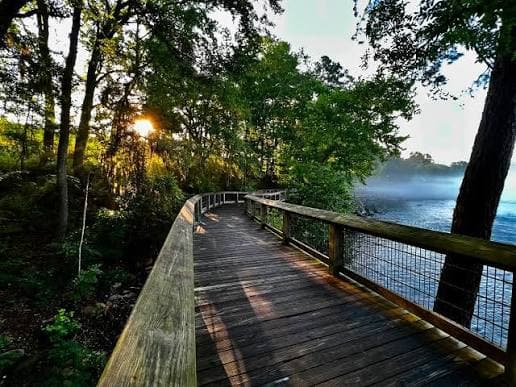
One of the most accessible ways to begin a slower day is a walk along the Saluda River near Riverbanks Zoo. The Saluda Riverwalk offers paved and boardwalk sections that follow the river’s edge. The path is shaded in many places and provides the steady sound of moving water—an immediate shift from urban noise.
Continue downstream and you reach the Sanctuary at Boyd Island. This seven-acre island sits where the Saluda and Broad rivers meet to form the Congaree. A footbridge leads onto the island, where a simple loop trail winds through native vegetation. Observation points look out over the confluence. Picnic tables and a gazebo offer places to sit without rushing. Sculptures of local wildlife appear along the path, but the overall feeling remains natural and unhurried.
The walk requires no special equipment or planning. It is simply a chance to move at a human pace beside the river and notice what is already there—birds, the current, the quiet of the trees. Many people find that even an hour or two here creates a noticeable mental shift.
Sesquicentennial State Park: Space to Breathe
About fifteen to twenty minutes east of downtown, Sesquicentennial State Park (known locally as Sesqui) offers a larger pocket of calm. The park covers more than 1,400 acres of Sandhills forest and centers on a peaceful 30-acre lake.
The Sandhills Hiking Trail, roughly two miles long, circles the lake on a mostly flat path with boardwalk sections over wetter areas. It is an easy, restorative walk suitable for nearly any pace. Along the way you pass open views of the water, stands of pine, and quieter stretches of wetland. A shorter Jackson Creek Nature Trail adds another gentle option.
The lake itself supports quiet activities. Kayaks, canoes, and paddleboards can be rented seasonally, or visitors can simply sit along the shore. Picnic areas and shaded spots make it easy to linger. The park feels removed from the city even though it is close, which is part of its value for a mental reset. There is room to walk, sit, and let the mind settle without the pressure of a more demanding destination.
The Firebreak Trail at Harbison State Forest
Northwest of the city, Harbison State Forest provides a different kind of natural experience. The Firebreak Trail is one of its most accessible and popular routes—a loop of roughly four to four-and-a-half miles through mixed pine and hardwood forest.
The trail is well-marked and offers a moderate amount of gentle elevation change. Sections feel open under tall pines; others move through denser woods. Wildlife is often present if you walk quietly. Because the trail is shared with mountain bikers, it is wise to stay aware, but the overall atmosphere remains peaceful for those who come seeking a slower pace.
Harbison sits close enough to Columbia for an easy half-day outing yet feels distinctly separate from daily routines. The simple act of walking a forest path for an hour or two, without a destination beyond the trail itself, supports the kind of mental reset many people are looking for.
Designing a Slower Day
A restorative itinerary does not need complexity. One effective pattern looks like this:
Begin with a morning walk along the Saluda Riverwalk and onto Boyd Island.
Return for a quiet midday rest or a simple meal.
Spend the afternoon at Sesquicentennial State Park or on the Firebreak Trail.
End the day back at a calm place to sleep, with time for a spa tub or an early night.
The point is not to fill every hour. It is to create space between activities so that the nervous system can downshift. Nature provides the external quiet; a restorative stay provides the internal recovery.
Why This Approach Matters
Travel that prioritizes mental reset is less about escaping life and more about returning to it with clearer energy. Short periods of slower movement outdoors, combined with genuine rest, help interrupt the constant low-level stress many people carry. The benefits are practical: better sleep, improved focus, and a renewed sense of perspective.
Columbia’s location makes this approach unusually accessible. Meaningful nature experiences sit within twenty to thirty minutes of a quiet place to stay. There is no need for long drives, complicated logistics, or high-intensity itineraries. The landscape itself supports a gentler rhythm.
Returning Home Different
The most successful restorative trips often feel deceptively simple. A walk beside a river. An easy trail around a lake. Time under the trees. Then a quiet room, a comfortable bed, and the chance to sleep without interruption.
When these elements come together, the effect compounds. The nervous system settles. The mind quiets. What felt urgent begins to feel manageable again.
Columbia, South Carolina offers exactly this combination. The Saluda Riverwalk and Sanctuary at Boyd Island, Sesquicentennial State Park, and the Firebreak Trail in Harbison State Forest provide accessible nature without crowds or complexity. A restorative stay nearby allows the benefits of those hours outdoors to take root.
In a time when many people feel overextended, choosing a slower pace is not a luxury. It is a practical way to protect mental clarity and physical energy. The Midlands of South Carolina make that choice both possible and surprisingly easy.