
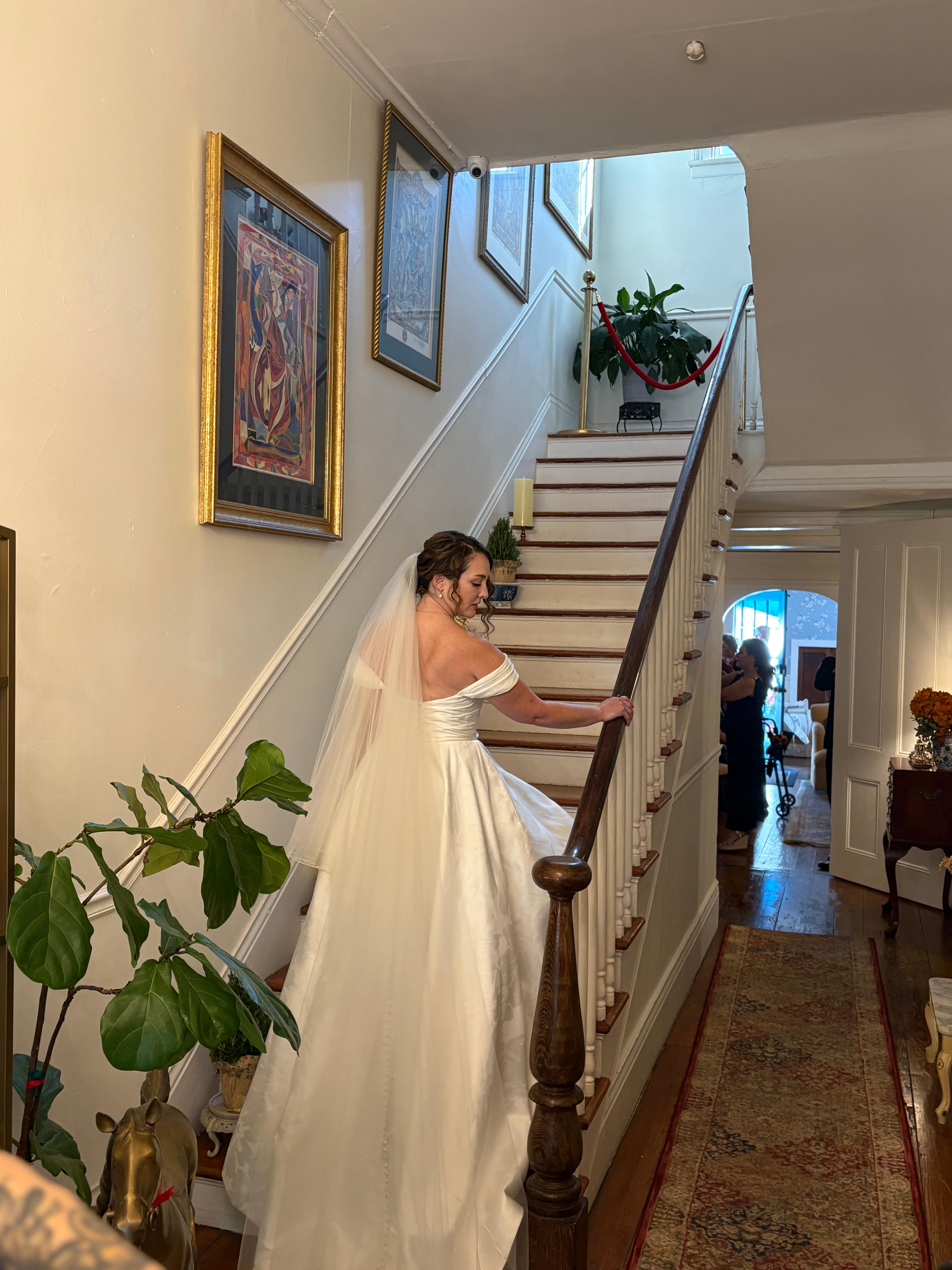
An elopement used to mean two people, a courthouse, and a story they told later. That is no longer the whole definition. Couples still leave the big production behind. They do not leave the day behind. They plan it. They invite the people who matter, or they invite no one. They want the clothes, the photographs, a real meal, and a place that is theirs for as long as they are in it.
The couples doing this are not skipping a wedding. They are refusing a year of decisions made for other people. The list. The seating. The cost that climbs every time a name is added. An elopement puts the two of them back at the center. The guest count is a choice. So is the budget. So is the date. A Friday can be the wedding day. So can a Tuesday. It does not have to be the one Saturday every hall in the city is already holding.
Why people are choosing it
The reasons are practical, which is why the shift stuck.
A large wedding spends the couple on the guests. An elopement spends the day on the couple. They hear their own service. They eat while the food is still hot. They are not posing their way through a timeline written for a ballroom. Parents can be there. A friend can read something. Or it can be the two of them and the person who marries them. Both are elopements. The modern one is defined by intention, not by secrecy. Small on purpose is not the same thing as hidden.
The money is real, and it is not only the headcount. It is the weekend that does not have to be a production, and the photographs that do not have to be squeezed between a cocktail hour and a last dance. Couples put what they did not spend into the part they will remember. The place. The pictures. The morning after.
What the day can be
There is no required script. Most elopements now include a few pieces, in whatever order matters to them.
A place to get ready, with enough time that no one is pinning a dress in a parking lot. A ceremony that is short because it is meant to be, in a garden, a parlor, or a courthouse if that is the point. Photographs while the light is still good, in rooms that already look like a photograph. A meal for the people who are actually there, not a plate for two hundred. And a night, often two, so the day does not end in a car on the way to a hotel someone else booked.
Some add a dinner. Some add a walk. Some want the whole property and no audience at all. The customization is the point. A package with a printed timeline is a small version of the wedding they were trying to get out of.
Why couples do it at Chesnut Cottage
Chesnut Cottage is a historic luxury inn in Columbia, a boutique hotel of five suites in a house that has stood since about 1850. When the cottage is yours, the door is yours. You are not sharing a lobby with a conference, and you are not being moved out of a banquet room because the next event is on the clock.
The pampering is the house itself. You get ready in a suite, not in a rented chair across town. Hair and makeup can happen on the property. Each suite has a spa tub, which is a better start to a wedding day than a fluorescent mirror in a venue bathroom. Breakfast the next morning is cooked for the people in the house. It is the meal, not a buffet line you stand in wearing what you fell asleep in.
The photographs do not need a set. The porch, the stairs, the garden, the gazebo, and the light through old glass are already here. Couples use the property that way, and downtown Columbia is close enough that the day can also step outside the fence. A street, a dinner, a second location. Or none of that. If the day should stay on the grounds, it can.
The ceremony fits the garden and the gazebo. Afterward, The 1718, the speakeasy under the house, holds a small group that wants to sit down together. Some couples want that hour. Some want the porch and an early night. You tell us which day you are actually having. A full elopement with the cottage to yourselves. A ceremony outside and a dinner downstairs. Two nights, so the morning is part of the wedding and not the ride home.
That is the difference between a hall and a house. A hall is cleared when the contract says so. A cottage is lived in. You get ready in it. You are married in it. You sleep in it. You come down to breakfast in it. A lot of couples do not know they wanted that last part until they are at the table, with nowhere else they have to be.
If the wedding you want is smaller than the one you have been assembling, you are not behind. The day can be as quiet or as dressed as you like. The house is already here. Tell us what yours should include, and we will build the stay around that, not around a template.